
35 is the peak of chess cognition


According to the Spanish "National newspaper" website reported on October 20, Austrian chess player Wilhelm Steinitz won the first world chess champion in 1886 (the first chess king in the international chess world: Steinitz), at the age of 49. Current world chess champion Manus Carlsen of Norway is the youngest world champion (16th in the chess world: Carlsen), and he was a few days shy of his 23rd birthday when he achieved this goal. These two are extreme cases, but studies of millions of chess moves since Steinitz's victory point to a trend that, while the age of optimal cognitive performance is getting younger and younger, this particular form of intelligence still peaks at 35, just as it did 130 years ago.
"Chess is a cognitively demanding task," said Uwe Sund, a researcher at the University of Munich in Germany. Together with two other economists, Sunder collected all the chess charts from the beginning of the World Chess Championship. Their goal is to use these chess charts to measure how cognitive abilities change over time and whether there are differences between generations. Other than this "time-invariant" game, Sund says, there is no tool to measure how intelligence has evolved over such a long period of time. Moreover, the championship also records all the information about how these outstanding players have moved throughout their careers.
They analyzed all moves (except for the first 10 moves) from more than 24,000 games of the championship from 1890 to 2014, involving more than 1.6 million moves from 20 world champions and 821 opponents. To determine the quality of each game, they put the best moves to a powerful machine. "Using a chess [computer] system allows us to have objective markers of cognitive ability," Sund says.
The findings, published in the scientific journal Proceedings of the National Academy of Sciences, reveal two phenomena that are virtually universal. On the one hand, they detected a hump in the evolution of cognitive performance: chess move performance rises for the first few years, peaks around age 35, and then declines steadily but substantively. "Second, this trait was reproduced in a substantially similar way across all players in our database, and the period effect [moves in a specific period] did not appear to have an effect," Sund stressed.
Over time, the hump-like curve gradually widened. "When we grouped them by year of birth, we found that younger groups did better overall and peaked earlier," Sund said. The hump is still there, also in the mid-30s, but close to 20 years. In addition, the average grades of the younger generation are higher than those of the older generation. The study found that 44% of moves made by players born in the last decades of the 19th century were considered optimal by machines. Among the generations born after 1970, that figure rose to 52 percent.
The authors deny that they have weakened the correlation of experience, but they do suggest that the link between experience and age has gradually weakened. Sund said: "Our findings do not call into question the value of experience; quite the opposite is true. We know that with the advent of computers and chess programs, the preparation and practice of chess has changed dramatically. Therefore, our data suggest that the conditions in which people grow up today, including rapid advances in digital technology, can affect their cognitive development."
 What are the pain points in learning chess that lead to a lack of popularity?
  Fast chess Super fast chess World Championship will fight -- Ju Wenjun Tan Zhongyi led the fight
 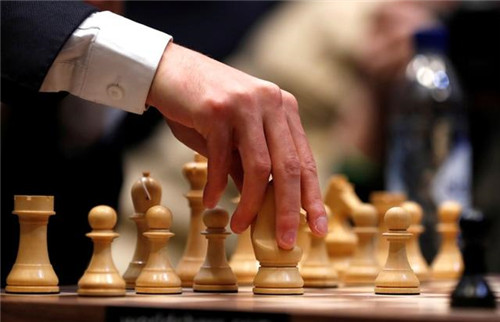 World Blitz Championship 2023 starts in Samarkand
  Which is more complicated than Chinese chess and chess?
  Action-packed start to World Rapid Championships in Samarkand
  Magnus Carlsen does it again: Fifth World Rapid Chess Championship title for the Norwegian
  Why is chess far less popular in China than other kinds of chess?
  Action-packed start to World Rapid Championships in Samarkand
  Uzbekistan's chess renaissance: 2023 World Rapid and Blitz Championships officially opened in Samarkand
  Chess, choices, and change: The Hector Guifarro story
  Chess book recommended
  Gergely Antal wins 2023 Hungarian Championship
  European Rapid and Blitz Championship 2023: Sarana and Navara win titles
  Abu Dhabi wins bid to host 47th Chess Olympiad in 2028
  Champions Chess Tour 2023: Magnus Carlsen scoops third title in a row
  Leon Livaić wins 2023 Croatian Championship
  Everything ready for the start of World Rapid and Blitz in Samarkand
  Mert Yılmazyerli wins 2023 Turkish Championship
  Huang Renjie won the "Belt and Road" National Chess Open
  Cross-border challenge! Norwegian chess grandmaster Carlsen responded to Salah's offer