
Why are the rules of chess so complicated?


The series of "Ten Days to learn chess thinking" discusses: "Chess as an enduring intellectual game, the secret of its success depends on 'balanced design and adjustment'."
The purpose of chess design can be summarized as "maximizing the chances that the stronger player in the game will win, while also maximizing the chances for the weaker player on the board." The former guarantees fairness, the latter provides contingency, and all restrictive rules are used to balance the relationship between the two, such as triple repetition of the situation and forced reconciliation is used to increase the profit space for the "weak party".
In light of this understanding, we go back to a major "version update" in the history of chess - the birth of the rule of king castling is not difficult to understand.
In 1498, the Gottingen manuscript recorded for the first time the "chariot translocation" - the coordination of the king and the chariot to move the king to a safe corner. Prior to this, the rule of castling was not officially established and only existed in some parts of Europe - for example, it allowed the White King to jump to g1, c1, c2, etc. The final rule of castling had its beginnings in the 17th century - for example, it allowed the White King to jump to g1, c1, c2, etc. The final rules for castling were formulated in the 17th century
No rule is created out of thin air, and it's important to understand the context in which it was created - if the original board setting is sufficient to ensure the balance of the game, there is no need to add a new patch.
Chess is no exception. The increased power of the queen breaks the pattern of the original layout, the danger of the king exposing the center is greatly increased, and the difficulty of "operation" is rapidly increased. For the best players, this adjustment process may be quick, but the new player can not understand the nature of the game in a flash, he can only realize that "I lose more easily than before."
Faced with this environment, what would you do if you were a game developer? There is no question of changing the rules. Weaken the "rising queen" or boost the "weak king"?
This is the "other science" of game design -- is it reasonable to have a "queen lift" that causes changes in the environment? If the previous balance was achieved because the queen was too weak, then obviously promoting the queen is necessary. Otherwise, after several versions, the queen becomes a "hidden piece" because it is too "useless", which is a loss for the game.
 What thinking ability does playing Weiqi exercise?
  The quintessence of Chinese culture | Chinese traditional culture -- Weiqi
  The origin of Weiqi
  Western cultural differences from the rules of chess
  Top 10 Benefits of playing chess for your brain
 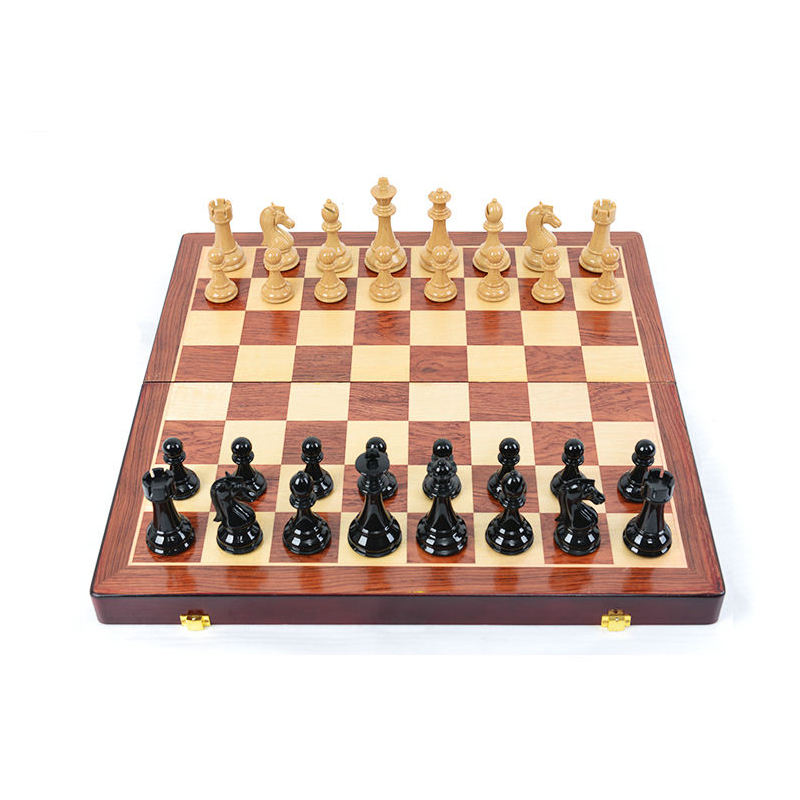 The five opening categories of chess
  The charm of chess
  How to learn chess systematically?
  Is there a pattern to chess openings?
  2023 Norwegian Chess Competition: Carlsen fatigue, Nakamura light flexible employment, is the traditional chess has reached the end of the road?
  Top 10 Benefits of playing chess for your brain